Bitterness or Boldness

Fannie Lou Hamer was the 20th child of a family of black sharecroppers in Mississippi.  Mostly self-educated, she became a champion for civil rights and decided in the latter half of her life to use her God-given gifts and abilities to bring justice to Ruleville and other parts of the South.

In 1962, at the age of 45, she heard a sermon that changed her life.  She was told that she was a citizen and could vote. She tried to register but failed the literacy test which was then required. She vowed she’d be back the next month to try again — and again — and again — until she passed.   The landlord came and told her that if she persisted, she’d lose the little bit of farming equipment she had and the land she and her husband were sharecropping.  She persisted and was evicted. One of the voter registration groups heard of her courage and asked her to work for them, which she did.  In her travels, she was arrested for going into the “whites only” part of a bus station, hauled off to jail and badly beaten. After some pressure from the U.S. Justice Department, she was released. Surprisingly, the bitterness that might have been there wasn’t. As she put it, “It wouldn’t solve any problem for me to hate people just because they hate me.”

Fanny Lou Hamer died of cancer in 1977.  And on her grave in Ruleville, Mississippi, there grows a cactus, one that flowers ever so often. On her tombstone are carved the words she lived by: I’m sick and tired of being sick and tired.  Both the cactus and the epitaph bear witness to the life of a woman who stood fast and strong against injustice and persecution but never allowed circumstances to make her bitter, instead she allowed them to make her bold.

Martin Luther once said, “Christians do not believe that we have an answer to the tragedies of life.  Rather what we have is a God who, in Jesus Christ, enters tragedy, stands with us and makes a way through.”  The cross of Christ, the greatest of the world’s tragedies, is a sign. Not an answer or a reason for the hurt that happens in life – it is something even better. The cross is a sign that God is with us, particularly in the dark times. The cross says, wherever there is tragedy, injustice, pain, there is God.

They question for us is will we allow life to make us bitter or will we allow it to make us bold?

Cantus Firmus


Cantus firmus means ‘fixed song’.  It is a term that applies to musical compositions, often liturgical masses, in which every section is composed using the same pre-existing melody.  This “fixed line” or “enduring melody” serves as a unifying force in the movements of the composition while still allowing a large amount of harmonic individuality.  


Lent invites us all to reconsider our cantus firmus, the fixed line upon which we base our beliefs and build our lives.  Consider the following fixed lines:


“God was in Christ reconciling the world.” 


“I can do all things through Christ who strengthens me.”


“Come to me when you are weary or burdened down and find rest.”


“I will be with you always.”


“Nothing in life or death can ever separate us from the love of God.”


What is the basic story, the prevailing narrative that gives meaning to your life?


What are the enduring principles that guide you and sustain you? 


What is your enduring melody?

Six Impossible Things Before Breakfast


Alice laughed. 

“There’s no use trying,” she said.  

“One can’t believe impossible things.”

 “I dare say you haven’t had much practice,” said the Queen.  

“When I was your age, I always did it for half-an-hour a day.  

Why, sometimes I’ve believed as many as six impossible things before breakfast.” 

Lewis Carrol’s Alice in Wonderland was a strange story before it was made into a movie. But seeing it played out on the big screen, in 3D no less, in an adaptation by Tim Burton, was an amazing experience.  Alice is thirteen years older now and accidently returns to Underworld, though she has no memory of her previous visit as a child.  She meets again, but to her for the first time, the strange cast of characters whom she encountered in her previous visit – the Mad Hatter, the Cheshire Cat, Tweedledee and Tweedledum, March Hare and the Dormouse   She finds herself in the middle of a war between the Red Queen and the White Queen and is told that she is the only one who can recover the Volpor Sword and slay the Jabberwockey dragon.

As she prepares to battle the Jabberwockey, she remembers a conversation she had with the white queen when she was a much younger girl, when the queen shared with her things she found hard to believe (especially that she was as old as she was).  The White Queen told Alice that in her youth she could believe “six impossible things before breakfast” and advised Alice to practice the same.  Alice began going through her list of impossible things she believed and the final one on the list was that she could defeat the Jabberwockey.  And she did.

We all at times struggle to believe.  We all at times face seemingly insurmountable obstacles or apparently undefeatable opponents.  Some of us fear the future will always remain uncertain or doubt that we will ever be truly known for who we are.  But there is wisdom to be found in the advice of the White Queen.   We must cultivate the practice of believing in the impossible.  We all need a list of at least six impossible things to believe before breakfast. 

Some may think it crazy to practice believing the impossible, and to a certain degree it is, but, as Alice told the Mad Hatter when he asked her if he had gone mad, 

“I’m afraid so, you’re entirely bonkers. 

But, I’ll tell you a secret.

All the best people are!”

What are the Jaberwockeys in your life? 

What six things make up your list?

Shopping List for the Soul

I have found that most people can be separated into two broad categories – those who make lists and those who form stacks.  I am a stack person.  I stack things, on my desk, in my closet, on my shelves.  There are stacks of papers on my desk, stacks of books on my shelves, stacks of clothes in my closet.    It may appear to some that I am unorganized, however, I can usually locate most anything fairly quickly, because I remember its general location in one of the many stacks that surround me on a regular basis.   And by process of elimination, eventually, I will find it. 

I am not, by nature, a list maker.  I just do not think that way.  I am a scribbler.  I will write something down on whatever is handy at the time, a piece of paper, a napkin, an old envelope or a note pad.   That has its challenges, as I have become painfully aware.  The only place I almost always require a list is the grocery store.  I will inevitably forget something every time I go to the store without a list. There are so many temptations and distractions that I always leave with something I had not planned to purchase and without something I had gone there to get. 

Consider the layout of a typical grocery store.  You walk in the door and immediately you are met with fresh flowers, the smell of bread baking, brightly colored fruits and vegetables all places strategically to capture your attention.  You have to walk all the way through the store to the very back to get milk, bread and meat, the staple items people regularly shop for most.    And then you must walk through the entire store again to check out, only to face the tempting tabloids with the latest sensationalized scenario to be splashed across the front pages,  as well as the candy bars, bubble gum, breath mints, nail clippers and lip balm no self-respecting person would ever be caught without.   Often, by the time you leave the store, the cart is stacked full of things that tickle the tongue, but do little to feed the body.  It is a clearly a conspiracy to capure well meaning folks in a web of temptations and distractions.

I can’t tell you how many times I have walked into the store without a list intending to get a gallon of milk, a loaf of bread, a piece of meat, or some other staple item, and a few other items to go along with it, only to leave with something I did not intend to buy and having forgotten something important I really needed.   I have learned the importance of making a list.  It helps me remember what is essential.

The spiritual journey of getting to that which can care for and feed our souls is similar to a journey through a grocery store.  In order to get to what is really important,  that which is essential for a healthy spiritual life, we must be willing to navigate the temptations and distractions that can keep us from ever getting to the essential, life-giving and spirit sustaining staples such as meditation and prayer, community and communion, word and worship.  We must feed our souls with real, spiritual food to  be healthy and whole. 

How is it with your soul?  What are you feeding on these days?  What temptations are you facing?  What tantalizing sights, sounds and smells are luring you away from what is essential, life-giving and spirit sustaining?   What are you carrying in your cart that ought to be put back on the shelf.   What have you forgotten along the way? 

Have you considered making a list?

Thin Places


Where do you go to get close to God?  Where are the significant spiritual locations in your life?  The early Celtic people believed that you could go to certain places to be closer to God.  The referred to these as “thin places,” geographical locations where there is only a thin line between the past, present and future, between the divine and the human.  

Agnes Norfleet writes,

“This Celtic sense of place designated significant natural locations as “holy trees, holy mountains, holy wells.” They were fascinated by shorelines where water met the land, by fjords and rivers, by wells where water bubbled up from deep below, by doorways which were the meeting places from the outside and inside. These places spoke of meeting, of transitions from one state to another, ‘where the veil between this world and the next is so sheer you can almost step through.’”  Over the years, the Celtic understanding of “thin places” broadened from not only geographical places, but special moments when the holy became more visible, when a person was able to “encounter a more ancient and eternal reality within the present time.”

Do you have a particular place that is holy to you in a similar way?  Can you recall a particular moment in your life when you felt especially close to God?  When was the last time you revisited a time or place of spiritual awakening? The significance of sacred places is not necessarily the places themselves.  “Their power lies within their role in marshaling our inner resources and binding us to our beliefs.”  Sacred moments, special memories, favorite pieces of music, significant words spoken at significant moments in our lives – my guess is that we all have experienced “thin places” whether we have been aware of them or not.

Certain passages of scripture can take us to such places.  Psalm 27 is one such passage. 

“The Lord is my light and my salvation; whom shall I fear? The Lord is the stronghold of my life, of whom shall I be afraid? Come, my heart says, ‘seek God’s face.’ Your face O Lord do I seek. Do not hide your face from me. I believe that I shall see the goodness of the Lord in the land of the living.”

” I believe that I shall see the goodness of the Lord in the land of the living…”

These words lead us to a place of encounter with God, where human and divine, eternal and temporal cross paths and create a “thin place.”  Lent invites us to a deeper intentionality in our living.  Lent invites us to “get closer to God,” to seek out those places where and moments when we are able see more clearly “the goodness of the Lord in the Land of the living.”  

Where are the thin places in your life? When was the last time you paid a visit?

Practice, Practice, Practice

At a young age, I took up an interest in basketball.  Watching Pistol Pete Maravich play like no player had ever played before, I became intrigued by the fast paced nature of the game and the free-flowing, high scoring, run and gun style of play that characterized NBA basketball in the mid 1970’s.  I remember sitting transfixed on Sunday afternoons watching games on TV.  I would see a wild shot and then immediately go outside and try to replicate what I had just seen.  When big name NBA players would compete in simple games of H-O-R-S-E, a novelty back then, I would see a shot and then go outside and try to perfect it… around the waist, through the legs, off the back board…left handed, one-handed, finger roll, no backboard…25 foot shot from the left baseline, no rim, nothing but net… I remember Pistol Pete being asked one day how he was able to do such amazing things with the basketball.  His reply, “Practice, practice, practice.”

My uncle, who was like a surrogate father to me, saw my interest in the game and decided that I needed a proper basketball goal and court.  He erected a goal in his yard and it became the spot of countless hours of practice.  Day after day, year after year, balls bouncing on the ground, feet pounding down the grass…all this took its toll on the yard.  Not long after the outdoor court opened, a bare spot began to form in the yard.  Over the years, the spot grew larger and larger as the practice became more intense and the neighborhood pickup games more frequent.  Eventually, no grass ever grew on or even near the court.   The landscape of the yard was forever changed.

Today, the goal is long gone, but that spot remains.  Each time I visit, I am reminded of the time I spent there working on my game, practicing my moves, improving my shot.  Practice changes us.  It affects the landscape of our lives.  It perfects our imperfections and helps to transform our weaknesses into strengths.  To this day, I can pick up a basketball and shoot with a certain degree of confidence because of all those years of practice.   I can recite my alphabet because of practice.  I know my multiplication tables because I practiced them so much as a child.   The key to life…practice.

Clearly there is a lesson here about faith as well.  Many people claim that Christianity is defined by a set of beliefs…those who believe the right things are the true people of faith.  But for me, the Christian faith is defined more by a set of practices than by a set of beliefs…worship, prayer, study, service, communion, fellowship, witness, generosity, hospitality…these are the faith practices that form and shape us.  The more we practice them, the more the landscape of our lives is transformed.  The more we practice them, the more visible the Spirit’s presence becomes in our lives.  The more we practice them, the more grounded we become in our faith and the more faithful we become in our witness.

Lent has arrived once again.  Its call is ancient, but its invitation is ever relevant…”practice, practice, practice.”

Holy Heresy

 
With appreciation to my friend Tom Miles, I post this tiny bit of holy heresy…

for those of us who have kept the faith for forty plus years as well as those who are recent converts. 


Peyton Manning, after living a full life, died and went to heaven.

When he got to heaven, God was showing him around.

They came to a modest little house with a faded Colts flag in the window.

“This house is yours for eternity, Peyton,” said God.

“This is very special; not everyone gets a house up here.”

Peyton felt special, indeed, and walked up to his house.

On his way up the porch, he noticed another house just around the corner.

It was a 3-story mansion with a black and gold sidewalk, a 50-foot tall flagpole with an enormous Saints logo flag,

and in every window, a New Orleans Saints towel.

Peyton looked at God and said “God, I’m not trying to be ungrateful, but I have a question.

I was an all-pro QB, I hold many NFL records, and I even went to the Hall of Fame.”


God said “So what’s your point Peyton?”

“Well, why does Drew Brees get a better house than me?”

God chuckled, and said “Peyton, that’s not Drew’s house, it’s mine.” 


“As for the saints who are in the land,

they are the glorious ones in whom is all my delight.” 

Pslam 16:3 NIV


A Whole New World

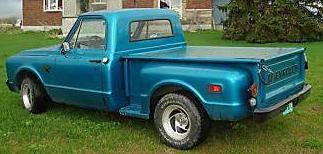
When I was 14, my uncle bought me a 1967 Chevrolet Pick-Up (that’s what we called trucks in MS).  It had no seat belts, bad brakes, a metal dash board and a wobbly suspension. It had no airbags, no emission controls, ran on leaded gas and had a custom air conditioner (of the roll down the window variety).  I drove it everywhere (you could get your permit at 14, which was as good as a license back then).  And no one thought anything about it.  But times change. 

I have watched with interest the intergenerational squabble unfold between Jay Leno and Conan O’Brien over who will host The Tonight Show.  It is clear that NBC should not have messed with a good thing.  If it ain’t broke, don’t try and fix it.  But they tried something new, it did not work, and now it has turned into quite a melodrama.   

My mother-in-law sent me the following piece recently.  I resonated with it because I resemble it. 

 To Those Born 1920-1979~~~From Jay Leno

TO ALL THE KIDS WHO SURVIVED the 1930’s, 40’s, 50’s, 60’s and 70’s!!

First, we survived being born to mothers who smoked and/or drank while they were pregnant.  

They took aspirin, ate blue cheese dressing, tuna from a can, and didn’t get tested for diabetes.

Then after that trauma, we were put to sleep on our tummies in baby cribs covered with bright colored lead-based paints. 

We had no childproof lids on medicine bottles, doors or cabinets and when we rode our bikes, we had no helmets, not to mention, the risks we took hitchhiking

As infants &children, we would ride in cars with no car seats, booster seats, seat belts or air bags.

Riding in the back of a pick up on a warm day was always a special treat.

We drank water from the garden hose and NOT from a bottle.

We shared one soft drink with four friends, from one bottle and NO ONE actually died from this.

We ate cupcakes, white bread and real butter and drank Kool-aid made with sugar, but we weren’t overweight because,
WE WERE ALWAYS OUTSIDE PLAYING!

We would leave home in the morning and play all day, as long as we were back when the streetlights came on.

No one was able to reach us all day. And we were O.K.

We would spend hours building our go-carts out of scraps and then ride down the hill, only to find out we forgot the brakes After running into the bushes a few times, we learned to solve the problem.

We did not have Playstations, Nintendo’s, X-boxes, no video games at all, no 150 channels on cable, no video movies or DVD’s, no surround-sound or CD’s, no cell phones, no personal computer! s, no Internet or chat rooms…….

WE HAD FRIENDS and we went outside and found them!

We fell out of trees, got cut, broke bones and teeth and there were no lawsuits from these accidents.

We ate worms and mud pies made from dirt, and the worms did not live in us forever.

We were given BB guns for our 10th birthdays, made up games with sticks and tennis balls and, although we were told it would happen, we did not put out very many eyes.

We rode bikes or walked to a friend’s house and knocked on the door or rang the bell, or just walked in and talked to them!

Little League had tryouts and not everyone made the team. Those who didn’t had to learn to deal with disappointment. Imagine that!!

The idea of a parent bailing us out if we broke the law was unheard of. They actually sided with the law!

These generations have produced some of the best risk-takers, problem solvers and inventors ever!

The past 50 years have been an explosion of innovation and new ideas.

We had freedom, failure, success and responsibility, and we learned HOW TO DEAL WITH IT ALL!

If YOU are one of them CONGRATULATIONS!

You might want to share this with others who have had the luck to grow up as kids, before the lawyers and the government regulated so much of our lives for our own good .

Kind of makes you want to run through the house with scissors, doesn’t it?

How any of us over the age of thirty survived is beyond me.  How anyone under the age of thirty will survive also causes me to wonder.  This piece reminded me that age, experience and the social context in which we were born shape us in ways we don’t always realize – how we view the world, how we live our lives and how we express our faith. 

It’s a whole new world and we must find our place and way in it… in spite of the risks.

Flesh that Becomes Word

See full size imageParadox, n. 1.[a seeming contradiction] – Syn. mystery, enigma, ambiguity. 2. [an actual contradiction] – Syn.  absurdity, inconsistency, ambiguity.  A paradox is a statement or group of statements that leads to a contradiction or a situation which defies intuition.

There is a classical philosophical paradox known as the omnipotence paradox which asks “Can an omnipotent being create a rock too heavy for itself to lift?  Among other things, this paradox addresses the paradoxical limits of power – the stronger we are, the weaker we often seem. 

The earthquake in Haiti, as natural disasters tend to do, has highlighted the paradoxical nature of power, both human and divine.  An earthquake striking the poorest nation in the Western Hemisphere renders the world almost powerless to respond.  We watch as the powerful struggle to help the powerless, wondering how in all our collective strength we can seem so weak.  We lament the abundant resources at our disposal and the limited resources at the disposal of those who need them the most.  Questions of God’s power and presence are inevitable.  A recent Newsweek article referenced the “Job like” characteristics of this situation.  There certainly are parallels.  Eternal questions about the power of God and the reality of human suffering have and will continue to defy human logic and intuition.  We do our best to lift the rock, but at times it seems too heavy for even the most powerful, God included, to lift.   We live constantly in the paradox of power.

I must confess a certain distaste for those who capitalize on natural disasters to promote their own religious or anti-religious agendas.  The Pat Robertson’s of the world cause my stomach to turn.  The Richard Dawkin’s of the world remind me of the hubris that denies the leaps of faith required in all rational endeavors.  Those who regularly co-opt God for their own personal gain and those ride the coat tails of natural disaster to sell more books proclaiming God’s punishment or God’s impotence frankly, disgust me. 

While I struggle myself to reconcile the power of love and the presence of hate, the gift of life and the reality of death, the abundance of resources and the scarcity of their availability for those who need them most, I repeatedly find myself  in the midst of the paradoxes of human existence.  

I believe in God, therefore I must struggle with the presence of suffering in the world and attempt to reconcile the seeming contridictions that arise. My Christian faith helps me in this endeavor.  As a Christian, I live the paradox of incarnation.  Divine presence revealed in human form(s).  God in the midst of the flesh and blood realities of human existence.  I  believe that the Christian faith offers a powerful counter narrative that embraces the paradox of incarnation captured in the words from the Gospel of John, “And the word became flesh and dwelled among us. ”  

I belive God is present in the midst of the suffering of the world, that God is the first to shed a tear when tragedy strikes or when disaster comes.  As I have watched the unfolding events in Haiti, seen the faces of the children, I have taken solace in the words of Russian philosopher, Nicolai Berdyaev,

“God is in the child which has shed tears, and not in the world order by which those tears are said to be justified.” 

In his highly theological and thoughtful Nobel acceptance speech, President Barack Obama acknowledged the paradoxical challenges we face in our world today.  He concluded: “We can acknowledge the oppression will always be with us and still strive for justice.  We can admit the intractability of deprivation and still strive for dignity.  We can understand that there will always be war and still strive for peace.”  We can live faithfully in the midst of paradox.

We live with many paradoxes in our lives.  But I have come to believe that incarnation offers a powerful counter narrative of hope in a world where suffering, cynicism and doubt so often prevail.  As a follower of Jesus, the word made flesh, the incarnation of God’s power and presence in the world, I believe that I am called to a life of paradoxical living, to be the flesh that becomes the Word, the person who strives to be a witness to the presence and the power of God in the world.  

The rocks may seem heavy, yet I still must strive to lift them. 

May it be so for us all.

We Belong

It has been my privilege to officiate at many baptisms over the course of my ministry.  It is the part of my job that brings me the most joy and has offered some of the most lasting memories. 

Some years ago, I had the privilege of officiating at the funeral of a very prominent physician in our community.  Dr. Julius Mullins was one of the founding doctors of Woman’s Hospital in Baton Rouge.  He had a long and distinguished career and was a very respected member of the Baton Rouge community.  I was a young pastor who had been recently assigned to the staff of a large church and the senior minister was out of town.  What was I to do?  I met with the family, planned the service and prepared my remarks.  As I stood to speak, I began by saying, “Dr. Mullins died knowing he belonged.” 

You see, several weeks prior, Dr. Mullins had contacted the church wanting to be baptized.  Well up in age and at times very confused, he could not remember having been baptized.  So Dr. Mullins was baptized.  And afterward, in a moment of clarity that often escaped him, he said, “Now I know I belong.” 

Yes, Dr. Mullins belonged.  We all belong.  To God and to one another. 

Baptism is an outward witness to an inward truth that we all belong. 

James Autry has written:

There is something about putting people under the water

and raising them up in the name of the Father, Son, and Holy Ghost,

something that makes people cry

That makes them want everything to be alright.

That makes them want to leave this place and be better,

to immerse themselves in their lives

And somehow be washed clean of all the things they should not have done

and still should not want to do.

That’s it.

Not the other things,

The star in the east,

The treasures in heaven

Or any of the old stories,

Not even life after death.

It’s only to be new again. 

The journey toward newness of life, beginning again, starting afresh, begins at the point of knowing we belong.  We belong to God and we belong to one another.  And that can knowledge can make all things new.