Category: Uncategorized

How Much Is A Picture Worth?

A story appeared on July 18, 2012, in The Times Picayune highlighting the public health issues surrounding the impending implosion of the Pallas Hotel, which was being brought down to make way for the new University Medical Center that is being built in downtown New Orleans.  Concerns about airborne particles and their impact on asthma and other respiratory problems had caused the state to put in place plans to evacuate a 600 foot perimeter around the site.  But the Iberville Housing Project sits 725 feet from the site and no plans had been made to evacuate the residents of the 400 apartment complex.  Accompanying the article was the following picture:

Public outcry was fierce.  The only problem was that the outcry focused not on the public health issues, not on the 125 feet of injustice that this picture represents and not on the brazen disregard for the poor who have no voice and must fend for themselves.  No, the public made its feelings known about whether or not the boy pictured sitting on the front steps of his apartment deserved to have an iPad, and the consensus was that a young, poor (black, though no one went that far) boy in the projects ought to have an iPad.  Some even went so far as to imply that it was probably stolen.

Another picture appeared on the Sunday following Hurricane Issac.  It showed a family from the small community of Braithwaite, in Plaquemine Parish,who had lost everything when their home was flooded, but had somehow managed to save a framed, signed jersey of New Orleans Saints Quarterback, Drew Brees.  Again, responses were quick and varied “Really, you lost your house, but saved the jersey?”  “Were there not more important things to try to salvage?”  Some saw them as true believers while others saw them as just another poor family with misplaced priorities.

Does a poor black boy from the projects deserve an iPad?

Should a poor family from a small community risk their lives to save a football jersey?

Who has the right to judge anyone without spending a day in their life or walking a mile in their shoes?

What does this have to do with me?

Today is Labor Day.  Most have a “day off” from the work that they do.  Many will benefit from those who do not get the day off from work.  Few of us truly realize the significance of labor, work and the sacrifices many make that prove beneficial to those of us lucky enough to have a “day off.”  It is easy on a day like today to misplace our priorities.

I took the time today to visit the website of the U.S. Department of Labor in hopes of better understanding the history and rationale behind this national holiday.  I discovered that

…”Labor Day, the first Monday in September, is a creation of the labor movement and is dedicated to the social and economic achievements of American workers. It constitutes a yearly national tribute to the contributions workers have made to the strength, prosperity, and well-being of our country….

The first Labor Day holiday was celebrated on Tuesday, September 5, 1882, in New York City, in accordance with the plans of the Central Labor Union. The Central Labor Union held its second Labor Day holiday just a year later, on September 5, 1883.

In 1884 the first Monday in September was selected as the holiday, as originally proposed, and the Central Labor Union urged similar organizations in other cities to follow the example of New York and celebrate a “workingmen’s holiday” on that date. The idea spread with the growth of labor organizations, and in 1885 Labor Day was celebrated in many industrial centers of the country. Through the years the nation gave increasing emphasis to Labor Day. The first governmental recognition came through municipal ordinances passed during 1885 and 1886. From them developed the movement to secure state legislation. The first state bill was introduced into the New York legislature, but the first to become law was passed by Oregon on February 21, 1887. During the year four more states — Colorado, Massachusetts, New Jersey, and New York — created the Labor Day holiday by legislative enactment. By the end of the decade Connecticut, Nebraska, and Pennsylvania had followed suit. By 1894, 23 other states had adopted the holiday in honor of workers, and on June 28 of that year, Congress passed an act making the first Monday in September of each year a legal holiday in the District of Columbia and the territories.” 1

So, Labor Day has been around for a long time.  But, as the saying goes, familiarity breeds contempt.  Few people today associate Labor Day with the Labor Movement.  I know I don’t.  Labor Day has almost become a national entitlement, a day off we all feel we deserve for working so hard.   Rarely do we think about those whose labors continue even when ours are able to cease, if but only for a day.   Few of us see anything wrong with benefiting from the labor of others.  If everyone else simply worked as hard as we have to get where we are, then they too could truly celebrate labor and obey the national cease and desist order that this day brings with it, for after all, as some would have us believe, we live in an opportunity society and those who work hard benefit, and those who don’t, well, they are the ones that have to work on Labor Day.

As I sat down to place my order for lunch today, I could not help but think of these pictures when I looked at the face of the poor student who was working so that I could enjoy a nice relaxing day of rest from all my labor.  She was pleasant, attentive and provided excellent service. The irony of the moment was overwhelming.  Here she and others were working so that I, and so many others, could enjoy a “day off.”

I hope that we all will take some time today and reflect on our lives – our blessings, our obligations, our faulty assumptions, our misplaced priorities, the things we have that we worked for and the ways in which we benefit from the work and labor of others.  It was Ian MacLaren who said, “Be kind, for everyone you meet is carrying a heavy burden.” 2

They say a picture is worth a thousand words.  But for the girl who waited on my table today, she was simply hoping it was worth at least 20%.


Wise Words from a Wise Man

I had the privilege of sharing the weekend and my pulpit with Dr. Lamar Smith.  He was Senior Minister at University Church from 1972-1980 and is now retired, but serves part time on the staff of First United Methodist Church in Ft. Worth, TX.  He and his lovely wife, Beverly, were our guests this past weekend.

During his sermon he shared two selections from his top ten list of things all pastors and people ought to know (taken straight from the pages of that modern theologian, David Letterman).

Number six on his list was

“Always remember that things are to be used and people are to be loved, not people are to be used and things are to be loved.”

Wise words from a wise man!

Profiles in Courage

In recent weeks, I have found myself lamenting the loss of political courage.  In the current climate of election year politics and political pandering, one is left longing for the truly courageous voice to speak against the negativity and the truly courageous act to stand for what is right, even if it means standing alone.

Paperback edition of Profiles in Courage.

In 1955 John F. Kennedy, then the junior Senator from Massachusetts wrote a book about political courage. In one of the more memorable quotes from the book, Kennedy wrote: entitled Profiles in Courage.   It chronicled the lives of Senators, some well-known and others not so much so, who had spoken out against injustice, stood on principle and shown courage in their words and by their actions, in spite of the political costs and consequences.  The book won the Pulitzer Prize in 1957.

“In whatever arena of life one may meet the challenge of courage, whatever may be the sacrifices he faces if he follows his conscience – the loss of his friends, his fortune, his contentment, even the esteem of his fellow men – each man must decide for himself the course he will follow. The stories of past courage can define that ingredient – they can teach, they can offer hope, they can provide inspiration. But they cannot supply courage itself. For this each man must look into his own soul.” 

I have found myself reflecting on this book and especially on the quote above.  In the current climate, political courage seems at times, virtually non-existent.  Self interest regularly wins out over the common good.  The voices of hope and inspiration are regularly silenced by the cacophonies of curmudgeonly clichés that dominate the airwaves. Politicians    must pander to the lowest denominator to get elected and then must often stoop even lower to stay in office.

In his book Children of Light and Children of Darkness, the great 20th Century theologian, Reinhold Niebuhr, wrote:

“Man’s capacity for justice makes democracy possible; but man’s inclination to injustice makes democracy necessary.” 

And, if I might paraphrase Niebuhr:

“The human capacity for courage can make the Biblical narrative more accessible and relevant; but the human inclination to act discouragingly can make the Biblical narrative less appealing, but even more important.”

Make no mistake about it, the Bible is a very political book, filled with examples of those who acted courageously amid very political circumstances.  Think of Moses, Elijah, Daniel, Esther, Ruth, John the Baptist and Paul, just to name a few.  Their stories, when coupled with our own stories, can be both instructional as well as inspirational.

Where are the calls and demands for courage coming from in your life?  What risks are you being called to take?  What stands are you being asked to make?  How are you responding?

During the month of August, I will be preaching a series of sermons at University United Methodist Church entitled Profiles in Courage.  This series will examine selected characters from the Bible and ask:  “What can we learn from their actions and their words that can inspire  us, offer us hope and help us determine the course we must follow?”

Join us at 8:30 and 11:00 each week beginning on August 5th at 3350 Dalrymple Drive.

Manager or Theologian?

I spent the past three days at a clergy retreat.  We gather every two years to tend our lives together.  We talked a lot about the state of the church.  We talked a lot about what it meant to be an effective pastor.  And we struggled with how to address both.  I found myself asking,  “Am I a manager or a theologian?”   The following article has proven helpful as I struggle with the question:

Oasis in Cambridge

Oct 25, 2010 by John M. Buchanan

The United Reformed Church of Great Britain has about 75,000 members in 1,600 congregations. It has been declining in membership for years. An enterprising URC minister from a London suburb, Martin Camroux, concerned not only about declining numbers but about the dearth of theological conversation in the church, persuaded one congregation that the best thing it could do for the denomination would be to fund a churchwide theology conference.

The result was “Renewing Reformed Theology,” held at Westminster College, Cambridge, with presentations by theologians, minister-scholars and one American pastor. The days began and ended with prayers in the small college chapel led by principal Susan Durber, whose series of reflections on Lucan parables I will not soon forget. She observed that the woman in Luke 13:20, given the amount of flour she had to knead, was no retiring, reticent, submissive woman but a “hefty wench capable of wrestling all that dough into submission and making enough bread to feed us all for three days.”

URC leaders and members are concerned about the secularism of British culture. Participants at the conference discussed the authenticity of the assumed-by-everyone secularism and wondered if it sprang from disillusionment with the church. There was agreement that the British press is thoroughly secular and dismissive of religion. Pope Benedict’s visit to the United Kingdom had taken place the week before, and everyone at the conference was laughing about a moment when a BBC reporter had snidely observed that the British were simply not interested in anything religious—while in the background thousands of teenagers were cheering the pope.

The Protestant in me wondered about the nature of the event as a “state visit” and the anomaly of the Catholic Church acting as a sovereign state. Reformed scholar David Cornick said the pope’s visit must be seen in the context of a 500-year history of hostility, persecution, bloodshed and martyrdom on both sides. Hostility and violence in Northern Ireland can be traced to Henry VIII’s break with the Catholic Church, he said. I was reminded of how much closer British people are to that ancient conflict than we are when I visited King’s College Chapel, just a short walk from Westminster College, and admired the massive, carved oak screen in the nave commissioned by Henry VIII. He left behind his initials and “A.B.,” for his queen at the time, Anne Boleyn.

What struck me most about the URC event was the decision of a small, declining denomination with many struggling congregations to spend precious resources on a theology conference. Maybe our URC brothers and sisters are on to something: when things are going poorly, get together and discuss some theology.

Sitting on the inevitable closing panel, I thought about how preoccupied I am with the organizational necessities of a church and a magazine. The conference was something of an oasis for me, I said, and I thanked the URC, Westminster College and my new friends for reminding me why I went into this work in the first place.

WHAT COULD HAPPEN?

Then Jesus appeared: he came from Galilee to the Jordan to be baptized by John.  

–Matthew 3:13

 His name was Owen.  He and his family had recently moved to town and joined the church where I was the pastor.  He had been raised in a Baptist church until his mother and father divorced and his mother began attending a Methodist church.  Now he split his time between his father’s Baptist church and his mother’s Methodist church.  Owen was ten when I first met him.  He was shy, self-deprecating and smart.  He brought his Bible with him to church every time he was in worship. He slowly began to fit in and find his place in the church and in the youth group.  One day after worship, he came up to me and informed me that he wanted to be baptized.  I asked him a few questions about his faith and was impressed by his understanding of baptism as well as his forthrightness.  I told him that I would be glad to schedule the baptism after talking with his parents. But there was one caveat.  Owen informed me that he wanted to be baptized in the river, “just like Jesus.”  I informed him that we had a perfectly good font with water in it that would suffice and that Methodists did baptism a bit differently than Baptists.  But then he pulled out his Bible and turned to Gospel of Matthew and read me the account of Jesus being baptized in the Jordan River by John.   How do you argue with a ten-year old who knows his Bible? 

 I talked with Owen’s mother and we scheduled Owen’s baptism for a Sunday afternoon.  The entire church was invited to gather at the river to witness a sight many of them had never seen.  The day came and we gathered at the river.  Owen and I waded into the water waist deep.  I asked Owen if he believed in Jesus and if he wanted to be baptized.  He said yes and down he went, immersed in the river’s waters, bathed by and baptized with the words, “in the name of the Father, Son and Holy Spirit, Amen.”  Owen came up out of the water with a smile on his face.  He was welcomed with towels and embraced by the congregation gathered in there in faithfulness and support.  I asked Owen how he felt now that he had been baptized.  His response echoes in my mind even to this day, “Now I know I really matter!”   “Yes you do, Owen.  Yes you do.”

 A new year has come filled with challenges and opportunities. Owen’s word is a word for us all.  We matter! Our presence matters!  Our gifts matter!  Our service matters!  You matter!  You matter to God and you matter to your church!  Your presence matters in worship.  It matters in Sunday School.  It matters in your small group.  It matters to the student you mentor.  It matters to the committee on which you serve.  It matters to the family you are blessed with.  It matters to the spouse or partner or friend with whom you share the journey.  You matter!  What could happen if we all chose to live like it really mattered, love like it really mattered, give like it really mattered, serve like it really mattered, pray like it really mattered and believe like it really mattered.  What could happen?

Thanks Dad!

In Romans 8, 14-16, Paul writes,

“For all who are led by the Spirit of God are children of God.  For you did not receive a spirit of slavery to fall back into fear, but you have received a spirit of adoption.  When we cry, “Abba! Father!” it is that very spirit bearing witness with our spirit that we are children of God…”

On Monday, May 10, I completed a journey that began forty-two years ago when I was brought home from the Mississippi Children’s Home by the man and woman who would become my mother and father.     My mother never went to college and my father’s life was cut short before he was able to finish.  I have his Associate’s Degree in my study.  He was working on his bachelor’s degree when he died of a heart attack at 33.  


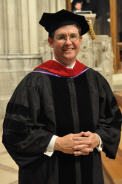
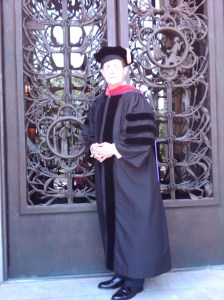
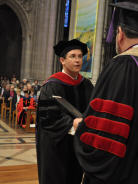
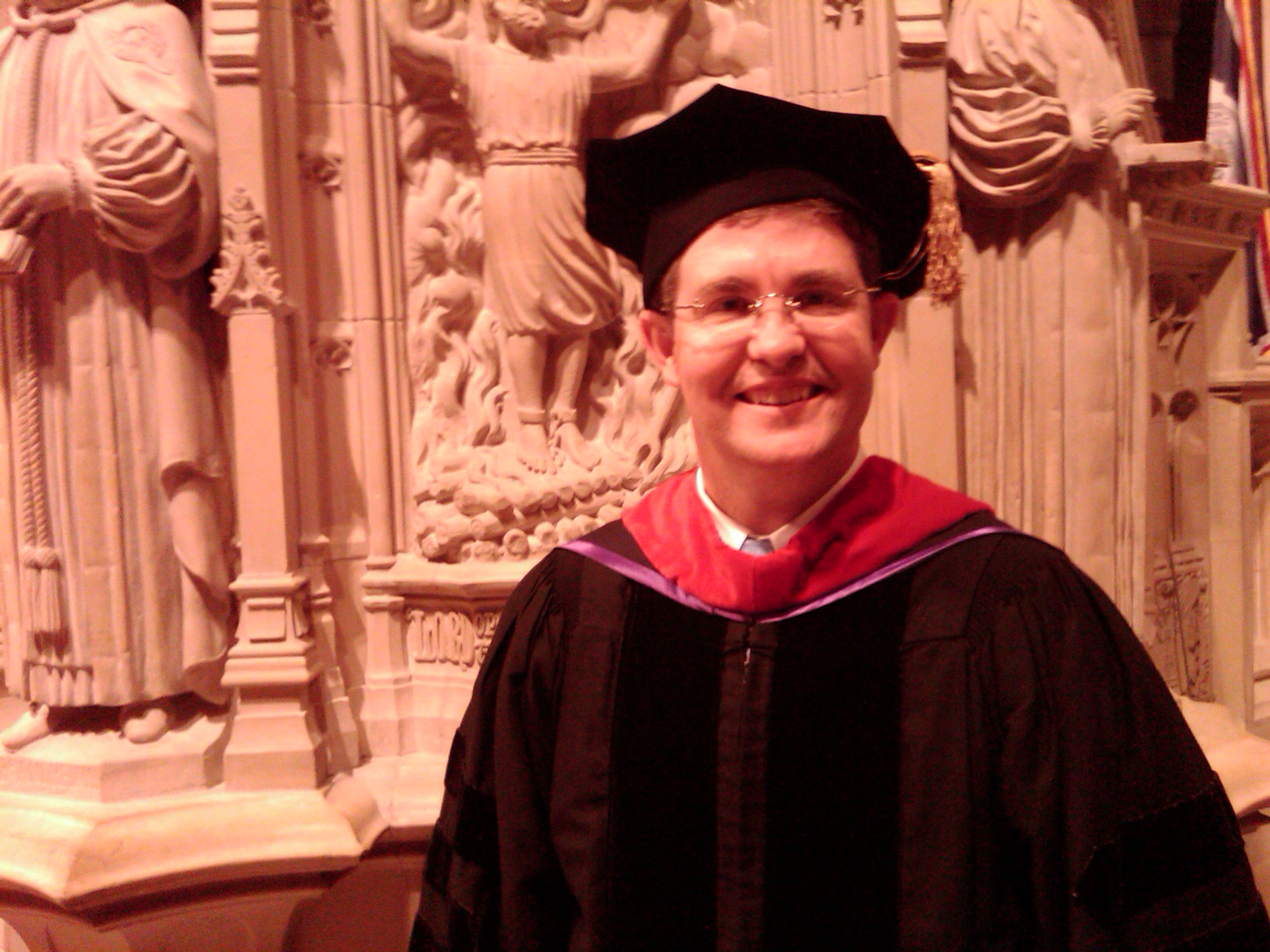
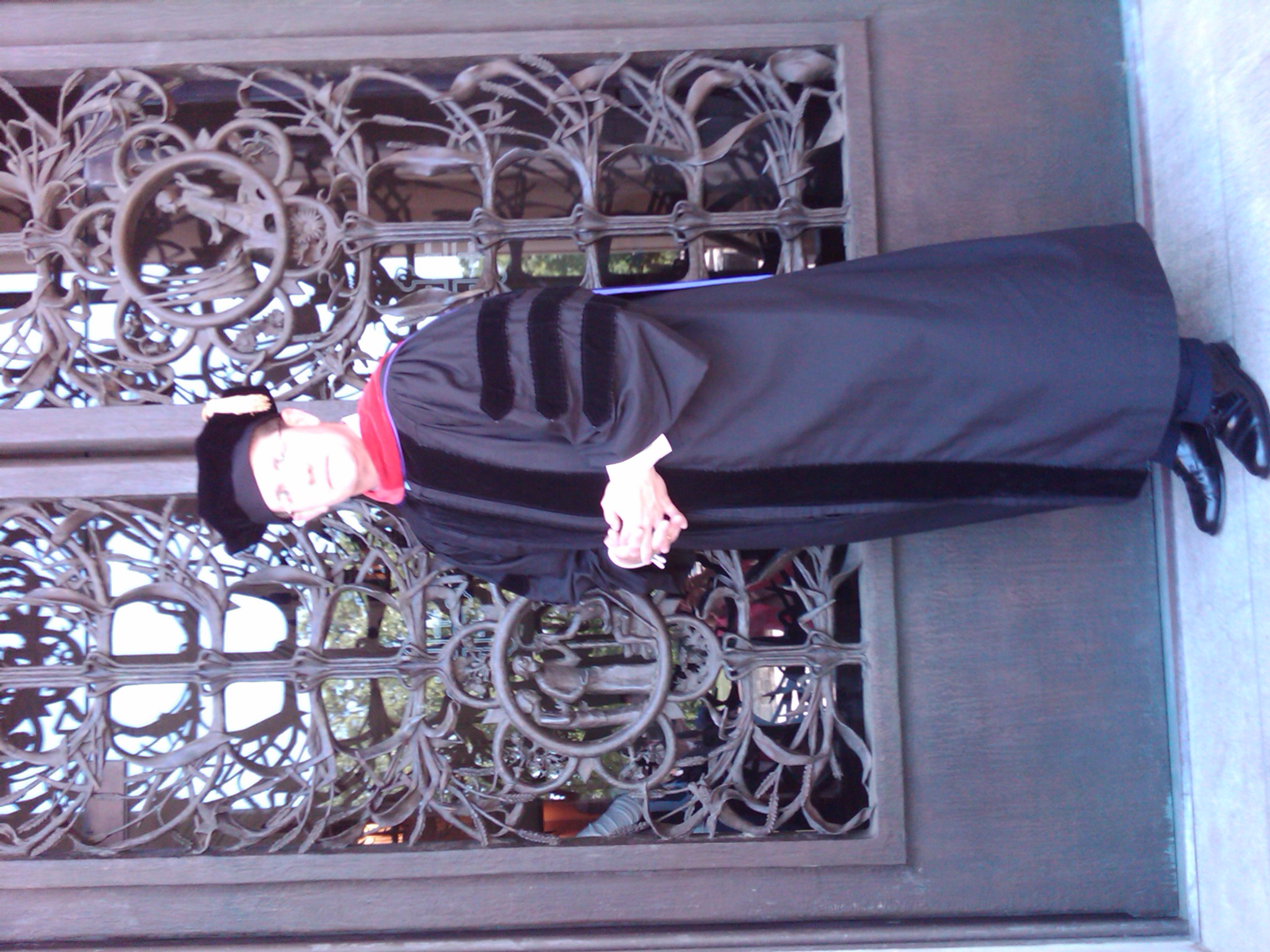
As I walked across the stage in the National Cathedral to receive my doctorate, I was deeply aware of a powerful presence with me, something like what I believe Paul was referring to when he referred to “the spirit bearing witness with our spirits.”  I said a prayer of thanks for all those who helped me along the way and for the opportunities I have been given.  And I said a special prayer of thanks for my father, who in four short years instilled much in me that has made me who I am.  It has been said that we stand on the shoulders of others.  I stood on his shoulders that day and my feet were firm and secure! 

Upon whose shoulders do you stand?

Emory’s Creed

Last Sunday the congregation I serve celebrated Earth Day.  I concluded my sermon with a quote from a former member of our congregation, Emory Smith.  Emory and his wife Annette were responsible for developing Hilltop Arboretum, that wonderful sanctuary for native southern plants located on Highland Road south of LSU.   In his small book, Hilltop: My Story, Emory writes:

Although church membership has meant a great deal to me, I can get a greater uplift of spirit when I see the sun gild the tops of the oak tress with a crown of glory or watch a band of laughing children playing under those trees.  I know that it is a privilege to help my neighbor find calmness of mind and uplift of spirit by contributing to an environment that speaks of peace and joy.  So we have worked and planned to enhance the beauty of our bit of nature.  To me, planning this woodland has been more than a landscape job.  It has been an attempt to put into tangible form my philosophy of life. 

The faith that I have found cannot be expressed by any of the greeds recited in the churches.  I cannot join in any of them without great reservations.  A faith is better expressed by the life we share with other people than by formal words. 

If I were to try to write the creed by which I live, it would be something like this:

I believe int he natural world about me and its fitness as a home for the human family.  It is my responsibility to do all I canto preserve this world of nature, to prevent its destruction or defilement.

I believe int he people among whom I life.  All of them have faults, but so do I.  It is in the people about us that we find our strength and the joy of life’s fulfillment.

I believe in myself, that I can meet life’s problems with courage and strength and calmness.

I believe in the world of nature in all that it means: the trees and the flowers about me, the smallest division of the molecule and the most distant stars of the universe.  As long as I live, I wish to face that world with insistent curiosity, but also with reverence and wonder.  I wish to be a good custodian.  May the small part of nature under my control be the better because of the way I have used it. 

May Emory’s creed be our own.  The world will be a better place because of it!

Competing Stories

It had been seven days since Ena Zizi had seen the light of day.  January 12, 2010 had started out as just another day in the life of the citizens of the Haitian capital of Port-au-Prince.  But then the ground beneath their feat began its violent upheaval and the historic buildings around them began to crumble. In an instant, the landscape of the city was forever changed.  Zizi was one of many who found themselves buried beneath multiple stories of rubble and debris.  In the immediate hours after the quake, the 70 year old woman yelled for help, but no help came.  For a while, she shared the company of a priest trapped nearby, but after two days, he grew silent.   Alone, afraid, her leg broken, her hip dislocated, her body rapidly dehydrating, she had little hope of survival and spent what she believed to be her last hours talking to God. 

Miraculously, on day seven, search dogs brought rescuers close by.  When Zizi heard them, she began to sing.  And she continued singing until they found her.  As they pulled her wounded and weak body out of the rubble and carefully passed her down the three stories of debris to the ground, she began to sing again.  Her words were inarticulate.  She hadn’t had anything to drink for seven days, but she was singing.  It didn’t matter that they could not make out the words, her joy was infectious.  Tears began to flow down the cheeks of the rescuers.  Nearby teams from heard her singing and stopped their work.  Spontaneous applause broke out.  A life had been saved.  But, more important than that, in a small corner of this tortured and broken city, if only for a moment, death and despair had been defeated.  Hope and joy were resurrected from the rubble.

We all know that the landscape of our lives can be changed in an instant.  We know how quickly things can crumble all around us.  We know what it’s like to fail, to feel all alone, to have no one to talk to, to feel broken and dislocated, hungering for something more, longing for just a drop of water to quench our thirsty souls. The world is filled with death and despair.  Tragedy strikes even the most established among us.  We all get tired, we all feel troubled, we all have burdens we must bear.  But far too often we let our anthropology get in the way of our theology.  We let Good Friday have the last word…There will be suffering, sorrow, and sadness next week as there was last week.  It’s always Good Friday somewhere. We know that story all too well.

But we also know another story.  We know the story of women who went to the tomb on that first Easter morning fearing that the story had ended, but learning that it was only beginning.  They came knowing that the movement was over, they discovered it was alive and well.  They woke up that morning with nothing to say, the left the tomb that day with a song to sing.  They discovered that the gift of Easter is hope – hope which gives us confidence…which nothing can shake.  That word is the final word for us!

Have you ever considered that maybe we are created for joy, hard wired for singing, capable of a devotedly defiant faith that can bring us forth from the tombs of our lives, give us the strength and courage to wake up and kiss the morning of a new day, no matter what that day might bring, and inspire us to second line our way through the sorrows and suffering of our lives knowing that, in the words of Robert Lowery,

(Our lives ) flow on in endless song;

Above earth’s lamentation

We  hear the sweet though far off hymn

That hails a new creation:

Through all the tumult and the strife  

We hear the music ringing;

It finds an echo in our souls—

How can we keep from singing?

Can you hear it?  In Port-au-Prince they are singing today.  They are singing in defiance of the reality that surrounds them.  They are singing because they know a different story.  They are singing because they have discovered that though weeping may linger for the night, joy comes in the morning.  Sunday has come.  The tomb is empty.  And it is time for us to come forth from the tombs of our lives.  Death, doubt and despair will not have the last word.  Our mourning has been turned into dancing, our tears into laughter, our sadness into song…Christ the Lord is risen today.  Alleluia!

Bitterness or Boldness

Fannie Lou Hamer was the 20th child of a family of black sharecroppers in Mississippi.  Mostly self-educated, she became a champion for civil rights and decided in the latter half of her life to use her God-given gifts and abilities to bring justice to Ruleville and other parts of the South.

In 1962, at the age of 45, she heard a sermon that changed her life.  She was told that she was a citizen and could vote. She tried to register but failed the literacy test which was then required. She vowed she’d be back the next month to try again — and again — and again — until she passed.   The landlord came and told her that if she persisted, she’d lose the little bit of farming equipment she had and the land she and her husband were sharecropping.  She persisted and was evicted. One of the voter registration groups heard of her courage and asked her to work for them, which she did.  In her travels, she was arrested for going into the “whites only” part of a bus station, hauled off to jail and badly beaten. After some pressure from the U.S. Justice Department, she was released. Surprisingly, the bitterness that might have been there wasn’t. As she put it, “It wouldn’t solve any problem for me to hate people just because they hate me.”

Fanny Lou Hamer died of cancer in 1977.  And on her grave in Ruleville, Mississippi, there grows a cactus, one that flowers ever so often. On her tombstone are carved the words she lived by: I’m sick and tired of being sick and tired.  Both the cactus and the epitaph bear witness to the life of a woman who stood fast and strong against injustice and persecution but never allowed circumstances to make her bitter, instead she allowed them to make her bold.

Martin Luther once said, “Christians do not believe that we have an answer to the tragedies of life.  Rather what we have is a God who, in Jesus Christ, enters tragedy, stands with us and makes a way through.”  The cross of Christ, the greatest of the world’s tragedies, is a sign. Not an answer or a reason for the hurt that happens in life – it is something even better. The cross is a sign that God is with us, particularly in the dark times. The cross says, wherever there is tragedy, injustice, pain, there is God.

They question for us is will we allow life to make us bitter or will we allow it to make us bold?