Pruning is not something we think about very often, and when we do, it is often seen in a negative light. None of us likes to be cut back or cut off, cleared away or cleaned out. And yet, it is often after times of intense pruning, that we experience periods of great growth. In the early 1990’s, I pastored a small rural church in central Ohio. It was farming country – -soybeans and corn to be exact – with its own internal vocabulary. “Knee high by fourth of July” meant a good crop of corn in the fall. “No till” meant there had been too much spring rain to get the tractors in the fields. “Harvest time” had both spiritual and temporal relevance. I could easily make the rounds every few months and visit the entire congregation. I have fond memories of this special time. Each time I read the gospel account of the vine and the branches, especially in John, with its focus on pruning, I think of the Shively family. They were fourth generation German immigrants who farmed several hundred acres. I always looked forward to visiting their home. They had a large front porch and Mrs. Shively always wore a smile on her face. We would sit on the porch and talk about family, church and community and I would get to taste her wonderful jellies and jams. And I especially enjoyed visiting in the late summer, for then she would share with me some of her special homemade summer wine, made from grapes grown in the small vineyard behind their house. I remember asking her one day about how to grow grapes. I have never forgotten her response. She said that the soil had to be conducive and the weather had to be cooperative, but the most important part of growing grapes was tending the vines – removing branches that produced no fruit, cleaning branches that were fruit-producing so they could get all the nourishment necessary to produce even more, and caring for the vine and branches after especially hard winters or stormy summers. “The key to good grapes,” she said, “is constant pruning.” From personal experience, constant pruning is also the key to a good life – removing things that hinder us or hold us back, cutting out the dead, dying or disabling parts of our lives, allowing God, the divine gardener to tend to us as needed, not just when wanted. With constant pruning, our lives can be like fine wine – healthy and robust, lived with a bold texture and a rich flavor . Without constant pruning, we may end up simply being sold by the box.
Author: Van
AN OPEN DOOR
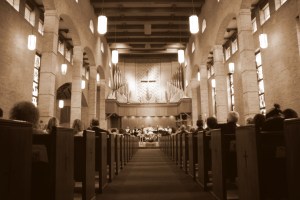
 Lent has begun. Forty days of spiritual preparation. Getting ready for the Ash Wednesday services, a staff member came into the office and informed us that he had just found a cat in the sanctuary. Stranger things have happened in my ministry. At one church there were rats, at another there were bats, and now cats. I don’t know how many “…ats” there are left to keep the rhyme going. Strange things can happen when you leave a church door open. Lost cats and even a few lost people often find there way in. I have also discovered that even stranger things can happen when we leave a door to our heart open. We may come face to face with grace, we may find redemption, and we could experience renewal. Lent invites us to open the doors, both of the church and of our hearts, expect something to enter in and be ready for it when it does.
Envy

“Admiration is happy self-surrender; envy is unhappy self-satisfaction.”
Soren Kierkegaard, Sickness Unto Death
Lessons From An Early Evening Run Part 2
 On a recent 2.5 mile run through my neighborhood, I found myself with the wind in my face for the first 1.5 miles and the wind at my back for the last mile. The first 1.5 miles required more energy to keep pace, more concentration to keep stride and more determination to keep going. I have discovered that the wind can be both friend and foe. It blows where it chooses and many times adjustments have to be made to keep pace, conserve energy and finish strong. Spirit in the Bible is ruach or wind. Blowing wind has been used to describe the movement of God’s spirit. Like the wind, the Spirit of God blows where it chooses and can seem, at varying times, to be both friend and foe. This is the season of shifting winds. Day to day, the rising and falling temperatures are based largely on the direction of the wind. Wind from the north brings cold artic air and lower temperatures. Wind from the south brings warm gulf air and higher temperatures. In the midst of shifting winds, storms often occur. They do in our spiritual lives as well. When the Spirit of God blows in one direction and we go in another, a spiritual storm can occur. The storm, rather than the Spirit drives us. As I run the race of life, how often do I run with the Spirit or against it? How can my life consistently be spirit-driven rather than storm-driven? Will this help me avoid, or at least, make it through, the storms of life? Maybe on my next run, I’ll have more answers.
Lessons From An Early Evening Run – Part 1
 On a recent run through my neighborhood, I found myself casting two shadows. Let me explain. It was dusk and the sun was going down over the western horizon. The moon was positioned high in the eastern night sky and the street lamps had begun to cast their rays throughout the neighborhood. About 1.5 miles into my run, I began to notice that every time I passed a street light, and the light was behind me, a long shadow was cast far in front of me. About 2 miles into the run, I suddenly noticed another shadow cast just over my right shoulder. It was a bit disarming at first, casting two shadows at the same time, one far in front of me, the other just over my right shoulder. The long shadow would come and go, but the short shadow stayed with me. At the end of my run, when both shadows were gone, I found myself wondering about the shadow that my life is casting. We all cast shadows with our lives, by the way we run the race of life, through our words and our deeds, in the way we invest ourselves in things that matter or things that really don’t, through the causes we support and the difference we try to make in the world. Yes, we all cast shadows….the question is…”Will they be long ones or short ones?”
ALL CAPS
 I recently received an email addressing a very important issue. Parts of the email were written in ALL CAPS. I am sure they were written this way to convey their importance, but according to email etiquette, ALL CAPS is tantamount to YELLING AT SOMEONE to get your point across. As I read the email, I discovered myself feeling less and less inclined to hear what was being said, not because of what was being said, but because of how it was being said. We live in a world that so often communicates in ALL CAPS. We talk AT ONE ANOTHER rather than talk with one another. Important issues get LOST IN TRANSLATION. The world can appear to be filled with nails when we go through life acting like a hammer. As I began to respond to this email, I found myself wanting to write back in ALL CAPS. Having been YELLED AT, I wanted to YELL BACK. But I also realized that if I yelled back, the issue would be lost in the emotion, and a genuine opportunity to discuss an important issue would have been missed. So, I waited until I could offer a lowercase response. The issue, after all, is important.
Lust Sunday
 Two weeks ago, I began a sermon series on the seven deadly sins. Beginning with pride, traditionally understood as the root from which all other sins spring forth, I have explored anger and will address greed on Sunday, followed by lust, gluttony, envy and sloth. I selected the order months ago. But I failed to consult the calendar listing other events planned for each Sunday before making my selections. I learned this week that Lust Sunday (that will get some attention on the sign out front) happens to also be Boy Scout Sunday. “Divine Serendipity” said a friend. “Ought to be interesting,” said another. “What were you thinking?” said still another. Having debated myself on the pros and cons of proceeding as planned, or changing course, I have decided to proceed as planned, drawing guidance from Dr. Seuss who said, “say what you feel, because those who mind don’t matter and those who matter don’t mind.” And, who knows, there might just be a few boys who decide to come back to church the following Sunday.
 Van's Blog