 As I was driving in to the office on Tuesday morning, comfortably exceeding the speed limit, I was passed by a black Honda Civic with tinted windows and a smashed in passenger side. Apparently the wreck had not limited the car’s ability to run, nor had it hindered the driver’s desire for speed. As the car sped by me, I happened to notice two bumper stickers on the rear, but could only make out one. It read, “Excuse me officer, I thought you wanted to race.” I could see the truth in that one. The young woman inside the car was “dancing behind the wheel”; she appeared to be singing at the top of her lungs oblivious to the clear crisis that had befallen her or the potential consequences of her speed. And the state of her automobile was apparently the last thing on her mind. Intrigued, I sped up so that I could perhaps read the other bumper sticker. As my speed exceeded 85 mph:( with no gain in site, I decided to back off and wait for the inevitable slow down that would occur up ahead. It did and I as I approached the car, the dance had not ended, nor had the singing. I was able to read the other bumper sticker. With apologies to all, it read, “It’s such a nice day, don’t f*** it up!” I must say that I was thrown back, not by the language, but by the spirit of bold defiance. A wrecked car, a cloudy day, and who knows, maybe even a few outstanding tickets, but a day filled nonetheless with a song and a dance and a spirit of hope for what was yet to be. All of a sudden, the worries of my day seemed a bit less important. I turned up the radio and decided to do my best to have a nice day and not mess it up for anyone else. Sometimes, life requires a bold defiance to face up to the challenges and persevere with hope and confidence.
Paul wrote in his letter to the Romans,
Therefore, since we are justified by faith, we have peace with God through our Lord Jesus Christ, through whom we have obtained access to this grace in which we stand; and we boast in our hope of sharing the glory of God. And not only that, but we also boast in our sufferings, knowing that suffering produces endurance, and endurance produces character, and character produces hope, and hope does not disappoint us, because God’s love has been poured into our hearts through the Holy Spirit that has been given to us. (Romans 5:1-5)

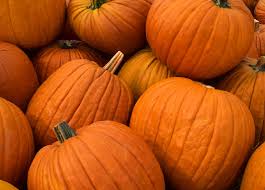 Every fall my church hosts a pumpkin patch. Several thousand pumpkins are delivered and placed amid the trees and fountains of the church grounds. People come from far and wide to search for just the right pumpkin. Children of all ages are captivated by the awe and wonder of the setting. It is a time of memories recalled and memories made. Cameras are ubiquitous and smiles are ear to ear. I meet friends I have not seen in a while, see children that I first saw when they were born or baptized some years ago. I watch as people give of their time and energy to help raise funds for important ministries of the church and community. I watch as some people encounter the church in a new way, some for the first time. I hope and pray they sense the spirit of thanksgiving and hope that undergirds this special place and time. I hope and pray that they might come to experience some deeper sense of God’s presence in this place and connect that with the church.
  The world-renowned psychotherapist, Carl Jung (1875-1961) displayed this Latin phrase above the front door of his home in Zurich, Switzerland. It is a powerful statement of faith and strength for those times when we feel God’s absence in our lives because of a crisis of faith, a family tragedy, or personal loss. Seasonal changes are happening all around us. The warmth of summer is being chased away by the cool of fall. The green of growth is being slowly replaced by the multi colored hues of life going dormant. Changes in the landscape of our world remind us of the seasonal changes that take place in our lives. I have found this phrase to be especially helpful and encouraging during times of seasonal change, especially when that change is personal. Vocatus atque non vocatus Deus aderit (Bidden or not bidden, God is present) Whether we call upon God or not, whether we believe in God or not, God believes in us and is always present in our hearts, in our daily lives, in our world, and in our universe. Thanks be to God!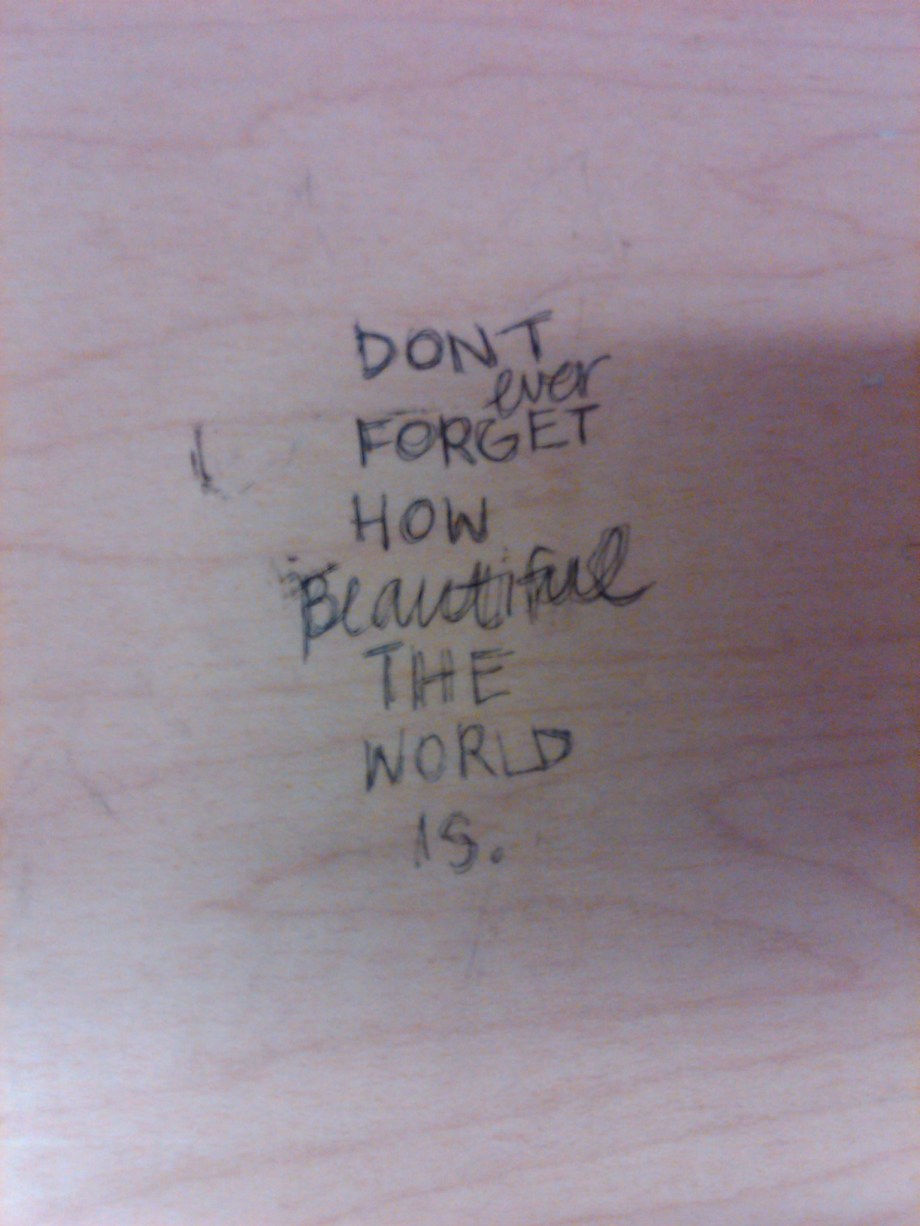
 I met him on Thursday. His name is George and he is in the first grade at University Terrace Elementary School. He and I will be spending time together each week over the next year. So that we could get to know one another better, we were given a series of questions to ask and answer. I learned that George likes to read and hates it when other kids misbehave. George has an older sister, a younger sister and two younger brothers. George loves to play on the playground and he likes candy a lot. He has a contagious smile and a playful spirit. When we got to the series of questions that asked, What state do you live in? What city do you live in? What street do you live on?, we made it through the first two just fine. But when we got to the third question, George began to struggle a bit. He did not know the street he lived on and answered, “Dead End Street.” I asked him if he really lived on “Dead End Street” or if he lived near a sign that said, “Dead End Street.” He could not or did not answer. And so we moved on to read a book together and then he gave me a tour of the playground. I took him back to his class and promised him I would see him next week. As I left, I said a prayer hoping that in some small way our time together will help insure that he does not end up living his whole life on “Dead End Street.”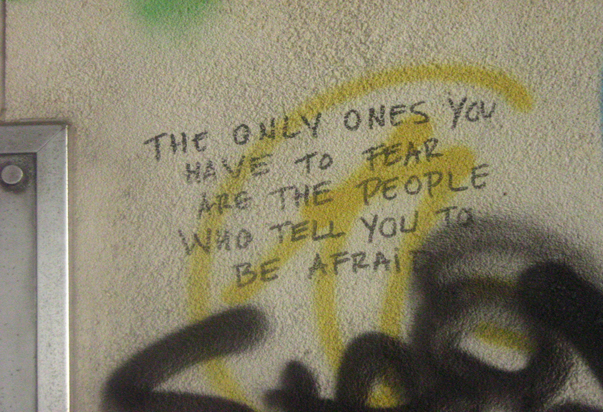


 Van's Blog